Lumetra
Choosing a reliable optical transceiver supplier can shape network stability, maintenance costs, and long-term project performance. A low price may look attractive, but it rarely tells the whole story. Compatibility, testing standards, delivery discipline, and technical support matter just as much.
In practical network sourcing, small details often expose major risks. Check whether the supplier provides clear datasheets, accurate coding information, and documented test procedures. Ask about fiber types, transmission distances, wavelengths, connector options, and operating temperatures. An experienced optical transceiver supplier should explain these specifications without hiding behind vague marketing language. Sample units can also reveal build quality, labeling accuracy, and packaging standards before a larger purchase.
Look for evidence, not promises. Review certifications, production capabilities, quality-control records, and customer references from similar applications. A dependable supplier should describe how it handles compatibility testing, firmware concerns, returns, and warranty claims. Response time matters when a link fails during installation. So does the ability to identify the real cause.
No checklist is flawless. Requirements may change after deployment, and even reputable suppliers can make mistakes. That is why clear communication and traceable documentation remain essential. Compare several suppliers against the same technical and commercial criteria. Confirm lead times in writing, and test critical modules before full-scale deployment. The best decision balances verified performance, responsive service, transparent pricing, and realistic risk management. Reliability is built through repeated evidence, not a polished sales presentation.
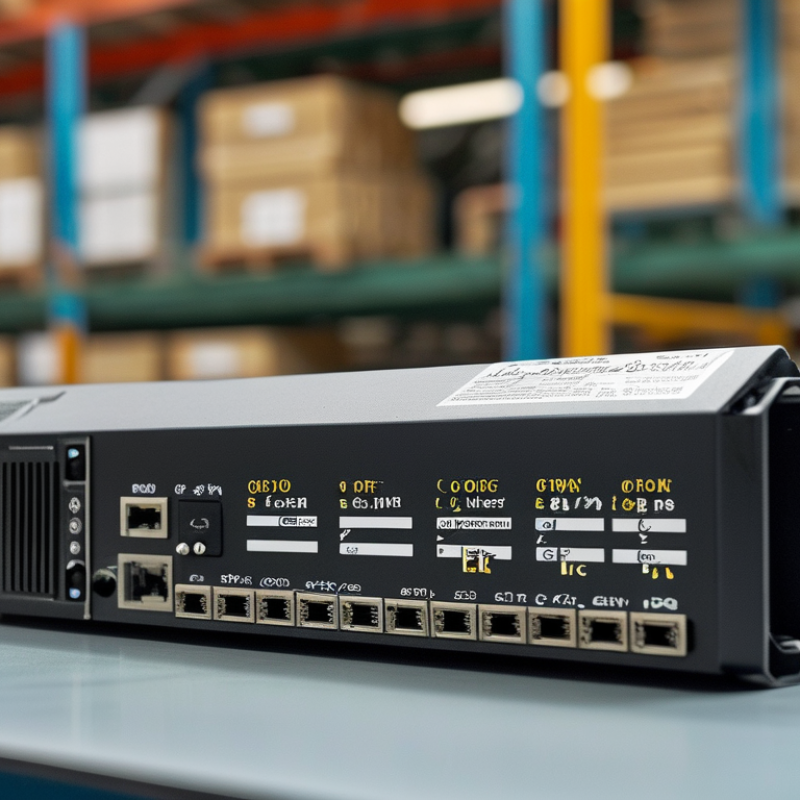
A reliable supplier search starts with a precise technical requirement, not a low quotation. Identify the network speed, transmission distance, fiber type, wavelength, and connector before contacting suppliers. For example, a 10-kilometer single-mode link needs different optics from a 300-meter multimode connection. Small details matter.
Check the equipment’s form factor, operating temperature, and power limits. Confirm whether the module must support digital diagnostics, temperature monitoring, or alarm reporting. In a data center, a standard temperature range may be enough. Outdoor cabinets often need wider protection. I once saw a purchasing plan that ignored airflow restrictions. The modules worked, but heat reduced their stability.
Ask suppliers for compatibility information based on your exact equipment model and software version. Request test records, optical power ranges, receiver sensitivity, and bit-error results. Do not rely only on a product table. A professional supplier should explain tolerance limits clearly and provide traceable quality documents. They should also describe how each batch is tested.
Consider future expansion. Selecting a module only for today’s bandwidth can create unnecessary replacement costs later. However, over-specifying every parameter also wastes budget. This balance is easy to miss. Define the minimum acceptable performance, the preferred option, and the conditions that require rejection. Include connector polarity, cable length, warranty terms, and replacement procedures in writing. Clear requirements make supplier comparisons more accurate and expose vague promises early.
How to Find a Reliable Optical Transceiver Supplier
Product quality should be checked before price becomes the main discussion. A reliable supplier should provide clear specifications for wavelength, transmission distance, fiber type, connector, and operating temperature. Ask for test reports, not only marketing sheets. A clean datasheet is not proof. Inspect sample modules for firm housings, accurate labels, and clean connector surfaces. Request details about testing, traceability, and batch consistency. In practical evaluations, checking digital monitoring data can reveal unstable temperature, voltage, or optical power. These details often matter more than appearance.
Compatibility requires careful matching with your network equipment. Confirm the module’s data rate, form factor, coding requirements, and supported standards. Check both ends of the link. A module may fit physically but still fail during system recognition. Test it with the exact switch, cable type, and distance planned for deployment. Ask whether the supplier offers pre-shipment testing and technical support. I have seen teams trust compatibility lists too quickly. A small mismatch can create intermittent errors that are difficult to reproduce. Leave room for verification.
Tips: Request a sample before bulk purchasing. Compare its readings under normal and high-temperature conditions. Check the supplier’s warranty, replacement process, and response time. Keep test records. They may expose quality differences between batches. If the supplier avoids detailed answers, pause the order. That hesitation can be useful evidence.
Use standardized link-reach specifications as an initial compatibility check. A reliable supplier should provide products whose data rate, fiber type, form factor, and maximum reach match the applicable Ethernet standard and your network design.
Reference values are standardized maximum link reaches for common Ethernet optical interfaces. Final validation should also include connector type, wavelength, optical budget, temperature range, digital diagnostics, and host-device interoperability testing.
How to Find a Reliable Optical Transceiver Supplier
Manufacturing capability should be verified beyond attractive product brochures. A dependable supplier can explain its optical assembly process, testing equipment, and production capacity clearly. Ask whether critical steps occur in-house, including laser alignment, firmware loading, calibration, and final inspection. Look for controlled work areas, documented procedures, and trained technicians handling sensitive components.
Testing evidence matters. Request sample reports for bit-error-rate testing, temperature cycling, optical power, receiver sensitivity, and data-center compatibility. A serious manufacturer should provide traceability from the finished module to key component batches. Serial numbers, inspection records, and calibration dates should be easy to verify. Visit the facility when possible. Observe whether test benches are active, instruments are calibrated, and rejected units are properly separated. Small details reveal real discipline.
Certifications support reliability, but they are not proof by themselves. Check the certificate number, issuing body, covered factory, product scope, and expiration date. Relevant evidence may include ISO 9001 for quality management, ISO 14001 for environmental management, and compliance testing for safety and electromagnetic requirements. Confirm applicable optical safety, material, and regional conformity reports. Be careful with copied certificates. I have found that supplier claims can sound complete while missing one critical product family. No factory is flawless. A transparent supplier admits process limits, shares corrective actions, and explains how it prevents repeated failures. That honesty is often more valuable than polished marketing language.
| Evaluation Category | Verification Dimension | Recommended Evidence or Benchmark | Why It Matters | Suggested Weight | Review Result |
|---|---|---|---|---|---|
| Quality Management | ISO 9001 certification | Valid certificate issued by an accredited certification body; verify the certificate scope, site address, validity period, and audit status. | Confirms that the supplier operates a documented quality management system covering controlled processes, corrective actions, records, and continual improvement. | 10% | Pass / Review |
| Environmental Compliance | RoHS and REACH conformity | Current declarations, restricted-substance control procedures, supplier material declarations, and laboratory test reports for applicable product configurations. | Helps demonstrate control of hazardous substances and supports market-access requirements in regions applying RoHS and REACH regulations. | 8% | Pass / Review |
| Environmental Management | ISO 14001 certification | Valid certification covering the manufacturing facility or facilities used for the proposed products. | Provides evidence of a formal environmental management system, including resource use, waste control, compliance obligations, and environmental objectives. | 4% | Pass / Review |
| Manufacturing Capability | End-to-end production control | Documented process flow covering incoming inspection, SMT or electronic assembly, optical subassembly, firmware loading, calibration, final inspection, packaging, and shipment release. | Reduces dependence on uncontrolled subcontracting and makes responsibility for product quality easier to trace. | 12% | Verified / Gap |
| Manufacturing Capability | Production capacity and scalability | Capacity plan showing normal monthly output, peak capacity, equipment utilization, staffing, planned expansion, and lead-time assumptions without disclosing customer or brand names. | Shows whether the supplier can support pilot orders, forecast changes, and sustained volume without compromising delivery or inspection controls. | 10% | Verified / Gap |
| Process Control | Optical and electrical calibration | Calibrated test equipment with traceable records for optical power, wavelength, extinction ratio, sensitivity, bit-error rate, current consumption, and high-speed electrical performance. | Accurate calibration is essential for verifying transmitter and receiver performance against the applicable product specification. | 12% | Verified / Gap |
| Reliability Testing | Qualification and stress testing | Test plans and reports covering temperature cycling, high-temperature operating life, damp heat where applicable, vibration, shock, ESD, and connector durability. | Reveals early-life failures and helps confirm that modules can withstand expected transport, installation, and operating conditions. | 12% | Verified / Gap |
| Standards Compliance | Interface and form-factor compatibility | Compliance matrix referencing the applicable IEEE 802.3 Ethernet specifications, MSA mechanical requirements, and management interfaces such as SFF-8472 or CMIS where relevant. | Improves interoperability with network equipment and reduces integration risk during deployment. | 10% | Pass / Review |
| Traceability | Serial-number and lot-level records | Ability to trace each module to component lots, production date, operator or workstation, firmware version, calibration results, final test data, and shipment batch. | Supports faster root-cause analysis, targeted containment, warranty handling, and field-service management. | 8% | Verified / Gap |
| Supplier Management | Incoming material and subcontractor control | Approved-vendor list, incoming inspection criteria, counterfeit-component prevention, change-notification procedure, and controls for outsourced assembly or testing. | Many transceiver failures originate from inconsistent components or uncontrolled process changes outside the final assembly line. | 8% | Verified / Gap |
| Change Control | Engineering change notification process | Written procedure requiring advance notification for changes to components, firmware, optical design, manufacturing location, test limits, or approved materials. | Protects system compatibility and ensures that qualification or customer approval can be completed before implementation. | 6% | Pass / Review |
| After-Sales Support | Warranty and failure-analysis capability | Published warranty terms, return-material-authorization workflow, failure-analysis report template, response-time commitments, and corrective-action procedure. | Provides a measurable method for handling field failures and preventing repeated quality issues. | 5% | Pass / Review |
| Commercial Risk | Business continuity and supply security | Documented risk assessment covering critical components, alternative sources, disaster recovery, capacity interruption, cybersecurity, and inventory strategy. | Reduces the probability that a single-site failure, component shortage, or unexpected disruption will interrupt network deployment. | 5% | Verified / Gap |
Price is useful, but it rarely tells the whole story. During supplier evaluations, I compare identical specifications, including wavelength, distance, connector type, and temperature range. A low quote may exclude testing, packaging, or replacement support. Ask for a complete cost breakdown. Also check whether prices remain stable for six or twelve months. Sudden changes can disrupt network budgets.
Lead time needs practical verification. Request the normal production schedule and the fastest realistic option. Then ask how delays are communicated. A supplier claiming shipment within two days may only be reselling available stock. Confirm inventory with dated availability information. For custom-coded modules, request a sample timeline from order approval to delivery. Small details matter. One missed component can hold an entire installation.
Supply stability requires more than a large warehouse. Review the supplier’s sourcing process, quality inspections, and contingency plans. Ask whether they maintain alternative component channels without changing performance standards. Batch records and test reports can reveal stronger operational discipline. I once treated repeated on-time delivery as proof of reliability, but that view was incomplete. A stable supplier should also handle sudden demand, technical questions, and reasonable warranty claims. Arrange a small trial order before committing to volume. Compare the delivered quality against the quotation, not only the promised numbers.
A reliable optical transceiver supplier should explain technical support before discussing discounts. Ask whether engineers can review link budgets, fiber type, connector polarity, and switch compatibility. Their answers should include measurable details, not vague claims. Request a sample compatibility test with DOM readings, such as temperature, voltage, and received power. Good support also identifies risks, including excessive insertion loss or unstable firmware. A quick reply is useful, but a technically correct reply matters more.
Warranty terms deserve the same scrutiny. Confirm the coverage period, operating conditions, and evidence required for replacement. Ask how failures are diagnosed and whether advance replacement is available for critical links. A dependable supplier records serial numbers, test results, and shipping dates. Request a sample failure report. It should show test equipment, measured power levels, and the final decision. “Send it back” is not a process. It is a delay.
Customer service becomes visible after an order arrives. Check response hours, escalation contacts, and communication during an RMA. Ask whether support can provide installation guidance and explain alarms without blaming the network team. A short pilot can reveal more than a confident sales call. Test one transceiver in a real cabinet, under normal temperature and traffic. Polished documentation can still miss a small coding mismatch. Useful warning. No supplier is perfect, so judge how openly it handles mistakes.
: Confirm wavelength, transmission distance, fiber type, connector, data rate, form factor, and operating temperature. Do not rely on appearance alone.
Samples reveal housing quality, label accuracy, connector cleanliness, and actual optical readings. Test them with your planned equipment.
Match coding requirements, supported standards, data rate, cable type, and link distance. Test both ends of the connection.
Request reports for bit-error rate, optical power, receiver sensitivity, temperature cycling, and compatibility testing. Marketing sheets are not enough.
Ask about laser alignment, firmware loading, calibration, final inspection, and production capacity. Check whether critical steps happen internally.
Observe active test benches, calibrated instruments, controlled work areas, and separated rejected units. Small details can expose weak discipline.
No. Verify certificate numbers, issuing bodies, covered factories, product scopes, and expiration dates. A certificate alone proves little.
Compare identical specifications and request a complete cost breakdown. Check testing, packaging, support, replacement terms, and inventory dates.
Start with a small trial order and compare delivered quality against quoted specifications. Keep batch records and test results.
Pause the order and request clearer evidence. That hesitation may be useful evidence. No supplier is flawless.
Choosing a reliable optical transceiver supplier begins with clearly defining your network requirements, including data rates, transmission distances, fiber types, connector options, operating temperatures, and equipment compatibility. These details help narrow the selection and prevent performance issues caused by unsuitable products. You should also review product quality through testing procedures, performance data, traceability, and compatibility verification with your existing network equipment.
A dependable supplier should demonstrate strong manufacturing capabilities, consistent quality control, and relevant industry certifications. When comparing potential partners, consider not only unit pricing but also lead times, production capacity, inventory levels, and long-term supply stability. Technical support is equally important, especially during installation, troubleshooting, and network expansion. Before making a decision, carefully confirm warranty terms, replacement procedures, response times, and customer service standards. By evaluating these factors together, businesses can select an optical transceiver supplier that offers dependable products, predictable delivery, and lasting technical support.
